
Skin Surface Lipid-RNA (SSL-RNA)
Monitoring Technology

Kao's SSL-RNA Monitoring Technology is provided for research use only and is not intended for therapeutic or diagnostic use.
What Is SSL-RNA Monitoring Technology?
Kao discovered human mRNA in sebum and developed its proprietary SSL-RNA Monitoring Technology. This non-invasive platform enables comprehensive profiling of approximately 10,000 mRNA species from Skin Surface Lipid (SSL) collected via an oil-blotting film.
How SSL-RNA Monitoring Works
-
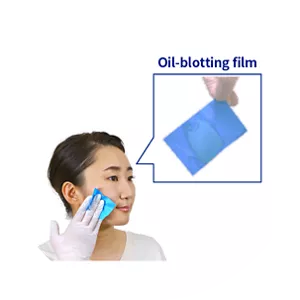
1. Collect sebum
-

-
2. Extract and purify RNA
-
-

3. Profile SSL-RNA expression
-
-

4. Analyze data
* Patented by Kao (Japanese Patent No. 6231252)
Features of SSL-RNA Monitoring Technology
Kao's SSL-RNA Monitoring Technology profiles RNA extracted from facial sebum collected using a single oil-blotting film. Because it can sensitively analyze trace amounts of RNA without damaging the skin, the technology has been applied in studies of infant atopic dermatitis. Owing to its low sampling burden, the technology can be incorporated into a wide range of study designs, from observational to interventional research.
Key Advantages
-

Non-invasive
collects samples without damaging the skin -
Simple
uses a single oil-blotting film -
Sensitive
profiles trace amounts of RNA in sebum
Discovery of "SSL-RNA"
The skin is often described as a "window into the body" because it can reflect a wide range of physiological states. RNA is a particularly informative biomolecule, offering a molecular view of subtle skin changes that are imperceptible to the naked eye.
FIND OUT MORECLOSE
Conventionally, RNA from the skin has primarily been obtained through invasive procedures such as skin biopsy. Kao hypothesized that RNA collection without damaging the skin could provide a simpler way of monitoring skin and body conditions. This idea drew on Kao's long-standing sebaceous-gland research, built through years of cosmetics development.
During sebocyte differentiation, sebaceous gland cells release intracellular lipids onto the skin surface through holocrine secretion. In this process, the cell membrane ruptures and intracellular components are released as sebum. Based on this mechanism, Kao considered that sebum might contain lipids and intracellular molecules such as RNA. Subsequent analysis confirmed the presence of human mRNA suitable for analysis in sebum.
For more information: Kao news release, June 4, 2019
Kao's original non-invasive analytical method for monitoring RNA
- Discovery of the presence of human RNA in sebum

What Is SSL-RNA Monitoring Technology?
Building on the discovery of SSL-RNA, Kao aimed to establish a technology for the comprehensive profiling of human mRNA in sebum. The key challenge was sensitivity: sebum contains trace amounts of human mRNA, which are difficult to analyze using conventional methods.
FIND OUT MORECLOSE
Through extensive optimization of reaction conditions, Kao established a proprietary high-sensitivity mRNA analysis method. Combined with stable sebum collection using an oil-blotting film, this approach led to SSL-RNA Monitoring Technology, thereby facilitating the profiling of approximately 10,000 human mRNA species.

Use Cases
SSL-RNA Monitoring Technology helps researchers capture internal molecular signals from the skin surface. It has been used to estimate biological skin aging and to investigate disease-associated molecular states in areas such as infant atopic dermatitis and Parkinson's disease.
Research Applications
- Gene expression profiling
- Biomarker discovery and identification
- Machine-learning-based estimation
-
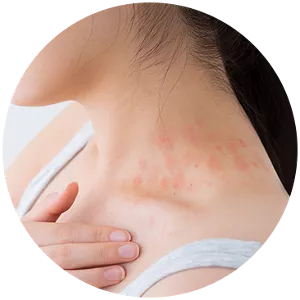
Discovery of SSL-RNA and application to atopic dermatitis
- Gene expression profiling
- Biomarker discovery and identification
-

Evaluation of Skin Responses to Various Interventions (Pharmaceuticals, Foods, etc.)
- Gene expression profiling
-

Biological age assessment
- Gene expression profiling
- Machine-learning-based estimation
-

Parkinson's disease research
- Gene expression profiling
- Machine-learning-based estimation
* These images are for illustrative purposes.
Beyond these examples, the non-invasive sampling method may support longitudinal studies that visualize physiological changes over time - for example, across a day, month, or year.
Publications
Discovery of SSL-RNA and establishment of analysis technology
1)Non-invasive human skin transcriptome analysis using mRNA in skin surface lipids.
Commun Biol. 2022 Mar 9;5(1):215.
https://doi.org/10.1038/s42003-022-03154-w
Association with atopic dermatitis in infants
2)Non-invasive transcriptomic analysis using mRNAs in skin surface lipids obtained from children with mild-to-moderate atopic dermatitis.
J Eur Acad Dermatol Venereol. 2022 Sep;36(9):1477-1485.
https://doi.org/10.1111/jdv.18173
3)mRNAs in skin surface lipids unveiled atopic dermatitis at 1 month.
J Eur Acad Dermatol Venereol. 2023 Jul;37(7):1385-1395.
https://doi.org/10.1111/jdv.19017
Association with sensitive skin
4)Non-invasive evaluation of subjective sensitive skin by transcriptomics using mRNA in skin surface lipids.
Exp Dermatol. 2022 Feb;31(2):172-181.
https://doi.org/10.1111/exd.14459
Association with Parkinson’s disease
5)Non-invasive diagnostic tool for Parkinson’s disease by sebum RNA profile with machine learning.
Sci Rep. 2021 Sep 20;11(1):18550.
https://doi.org/10.1038/s41598-021-98423-9
Association with infectious diseases
6)Non-invasive SARS-CoV-2 RNA detection and human transcriptome analysis using skin surface lipids.
Sci Rep. 2024 Oct 30;14(1):26057.
https://doi.org/10.1038/s41598-024-77862-0
Association with asthma
7)Skin surface lipid-RNA profile obtained from patients with severe asthma after benralizumab treatment.
J Asthma Allergy. 2024 Nov 6;17:1103-1113.
https://doi.org/10.2147/JAA.S490832
8)Impact of dupilumab on skin surface lipid-RNA profile in severe asthmatic patients.
Curr Issues Mol Biol. 2024 Oct 15;46(10):11425-11437.
https://doi.org/10.3390/cimb46100680
Association with food intake
9)Effects of diacylglycerol-enriched alpha-linolenic acid oil on skin properties in mild skin discomfort : a randomized, double-blind, placebo-controlled study.
Sci Rep. 2026 Jan 6;16:4785.
https://doi.org/10.1038/s41598-025-34887-3
SSL-RNA Monitoring Technology
contributes to generating new research insights.
